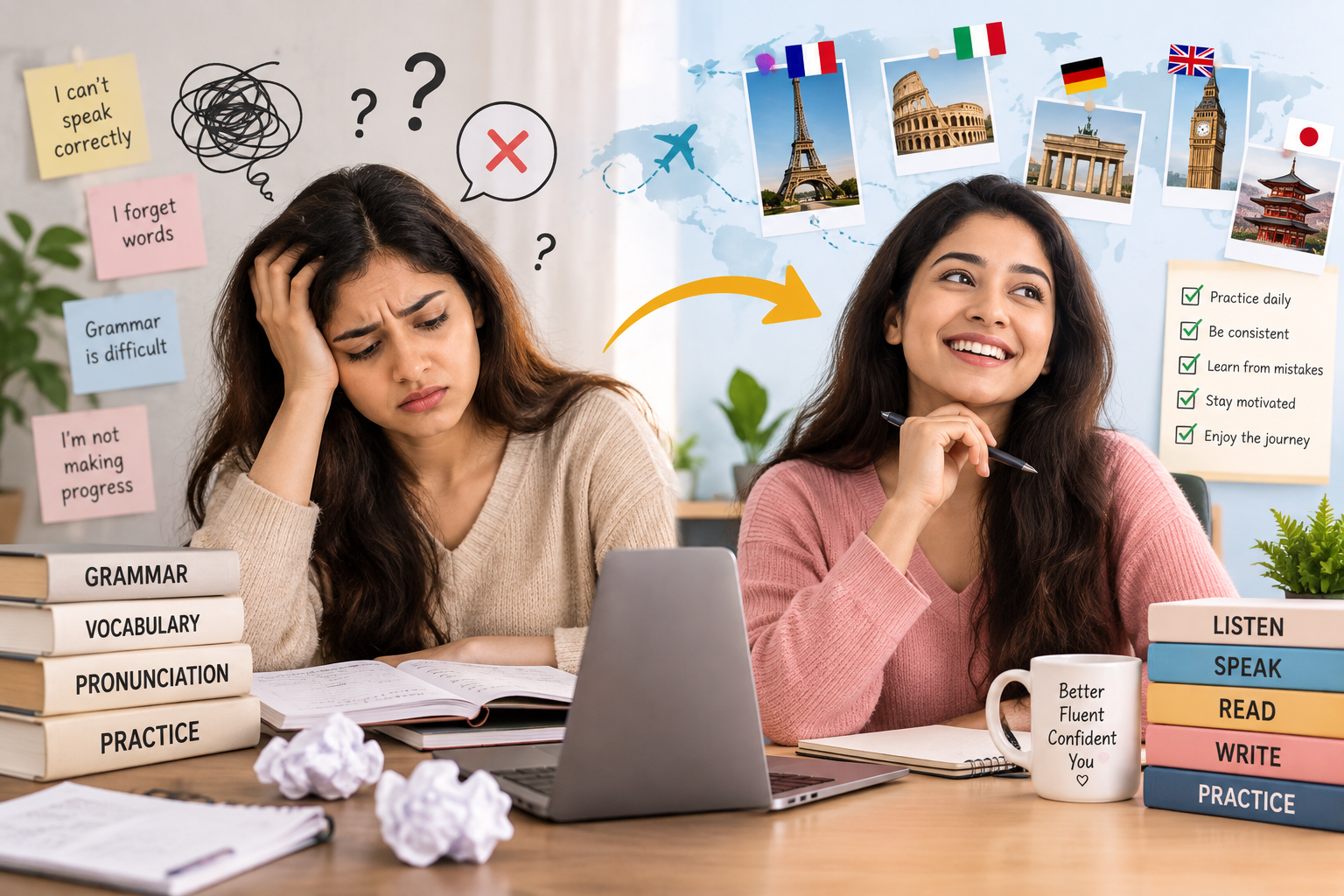
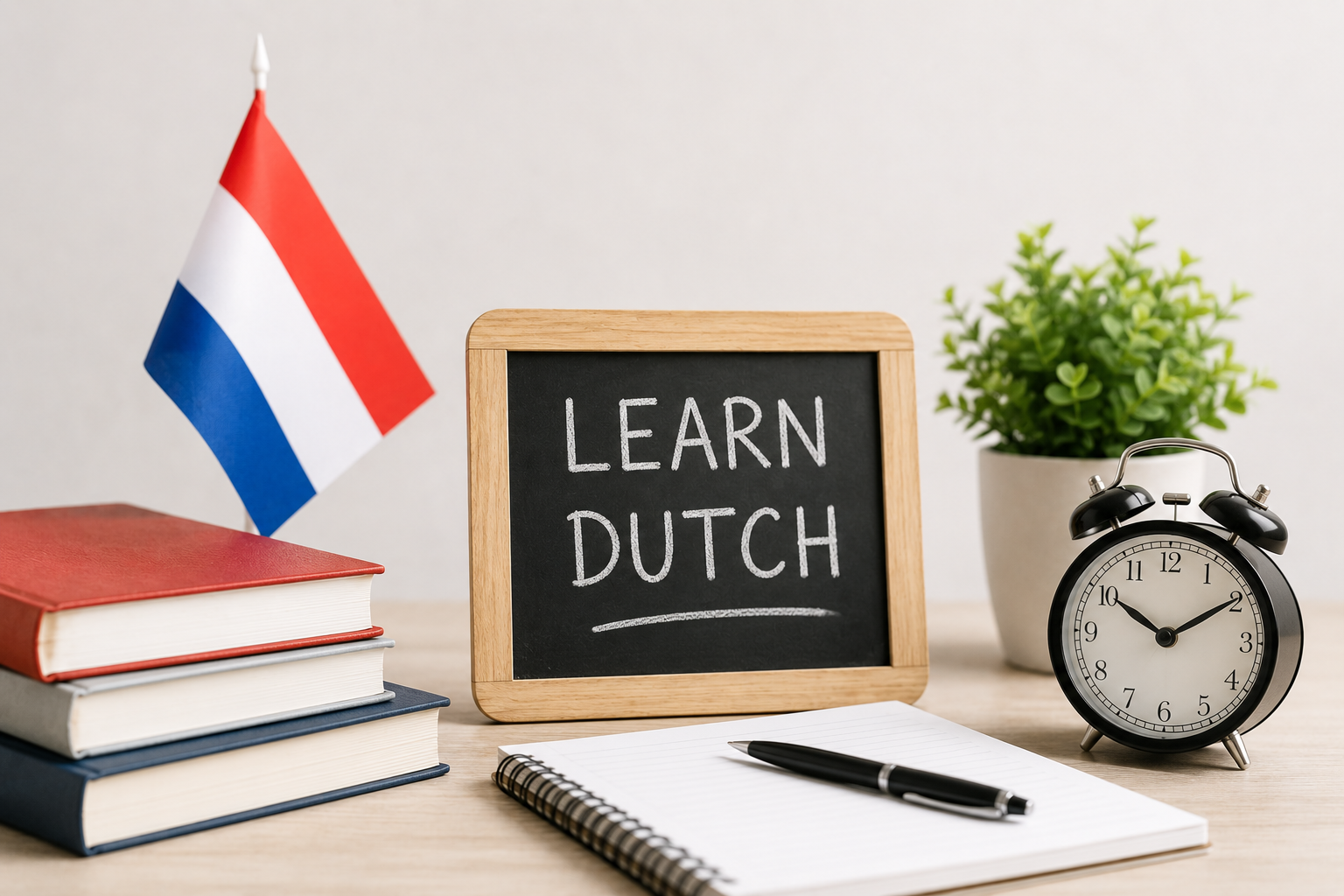
Learning a new language can be scary for most learners. But they all make a common mistake. They don’t research the history of that language. In our online Dutch language lessons at The Dutch Minds, we help our students understand the basics, origins, and history of the Dutch language before enrolling, so it is easy to understand and learn.
You must be imagining an online Dutch course full of grammar and pronunciation. The truth is different. Dutch is one of the friendliest languages for English speakers. Why?
1. Dutch is Basically an English Cousin
Both Dutch and English belong to the same language family. They are both Germanic languages. This means that when you hear words such as “water,” “appel,” and “boek,” you do not have to learn something new altogether. You simply meet an old acquaintance dressed up in a slightly different way.
2. No Need to Deal with Any New Alphabet
Dutch uses the same Latin alphabet as English. This eliminates all sorts of confusion and frustration that beginners usually experience while trying to learn some new writing system.
3. Sentences Work Logically
Basic sentences in Dutch use the same subject-verb-object order that you’re used to from English. Things do become somewhat complicated when subordinate clauses are introduced, but at least you start from something familiar, which is precisely why you can construct sentences in a good Dutch language course after a few weeks.
4. Verbs Aren’t Trying to Break Your Soul
When you’re used to staring at French and Spanish verb tables until you feel like your soul leaves your body, this should come as a relief: Dutch verbs remain fairly stable between different subjects. Some general rules can help you learn most of the verbs easily enough.
5. Grammar Leaves Out the Worst Bits
While Germans have four noun cases, which affect articles and endings endlessly, Dutch decided to avoid almost all of that trouble. Basically, you just have “de” and “het” to learn, frustrating at first, certainly, but nothing even resembling the madness of German cases.
6. Pronunciation Has Rules You Can Follow
Okay, the “g” sound is always going to make you stumble at first (been there, done that), but after that initial struggle, Dutch becomes remarkably consistent in pronunciation, with words pronounced as they are written. Compare that to English “though,” “through,” and “tough.”
7. You Know More Words Than You Realize
Dutch borrows countless words from English. In technology, business, and casual speech, Dutch uses English as a major source. Words like “computer,” “weekend,” and “internet” don’t need translating. Tune into Dutch radio or flip through a Dutch Instagram feed, and words you recognize will appear in abundance.
8. The Country Immerses You Without Trying
There is one weird benefit: since a large number of the Dutch population speak excellent English, bilingual materials abound in this country – everything from Dutch TV series with English subtitles to dual-language menus and patient people who explain things to you. This is immersion in full comfort.
Know how to learn Dutch language using online immersion.
9. Learning Materials: Understand Your Situation
Since numerous people migrate to the Netherlands for work and marriage, there is no shortage of Dutch language courses designed for adult immigrants. There are lots of materials that do not include complex vocabulary from outdated academic textbooks.
10. Success Is Guaranteed
When you combine all of the above-mentioned advantages, beginners usually reach that special moment of recognition much quicker in learning Dutch than in more challenging languages. And success is the thing that makes you continue rather than quit learning after two weeks.
Why Online Dutch Language Lessons Make Everything Much Simpler?
The thing no one will tell you is that the ease of the language won’t help too much: structure is what counts. Jumping from one YouTube video to another or changing apps will leave holes in your knowledge that will become apparent once you get stuck in the middle of the conversation. The proper online Dutch course will combine grammar, real-life speaking, and context with an actual teacher correcting your mistakes right away, rather than letting you figure everything out on your own.
Here is how to learn Dutch language easily with the best online Dutch language classes.
Frequently Asked Questions
1. Is Dutch similar to English?
Yes, because they are part of the same group of Germanic languages and share vocabulary and structures.
2. Why is Dutch so easy to learn?
Vocabulary that sounds familiar to English speakers, simple verb conjugation rules, phonetic spelling, and common alphabet make for a much gentler learning curve compared to most languages.
3. Is Dutch easier than German or French?
Dutch is easier than German due to less complicated noun declensions and being much more phonetic than French.
4. Can English speakers understand Dutch easily?
Not immediately, but you will be surprised by the number of similar words you will get within a relatively short period of time because of the common linguistic ancestry.
5. What makes Dutch grammar simple?
The Dutch language has no difficult noun cases, simple verb conjugation, and even sentence structure that sounds very familiar to English speakers.
6. Is Dutch a good first foreign language to learn?
Certainly, with its simple grammar and words that are similar to English, it can really be called a good choice for your first foreign language.
Don’t believe the rumors about Dutch being difficult. The language is very logical and familiar and can be really fun when you stop overanalyzing everything. If the only thing stopping you was the fear of trying it out, maybe this will give you that extra push. Face your fear with online Dutch language lessons by The Dutch Minds. Join today!