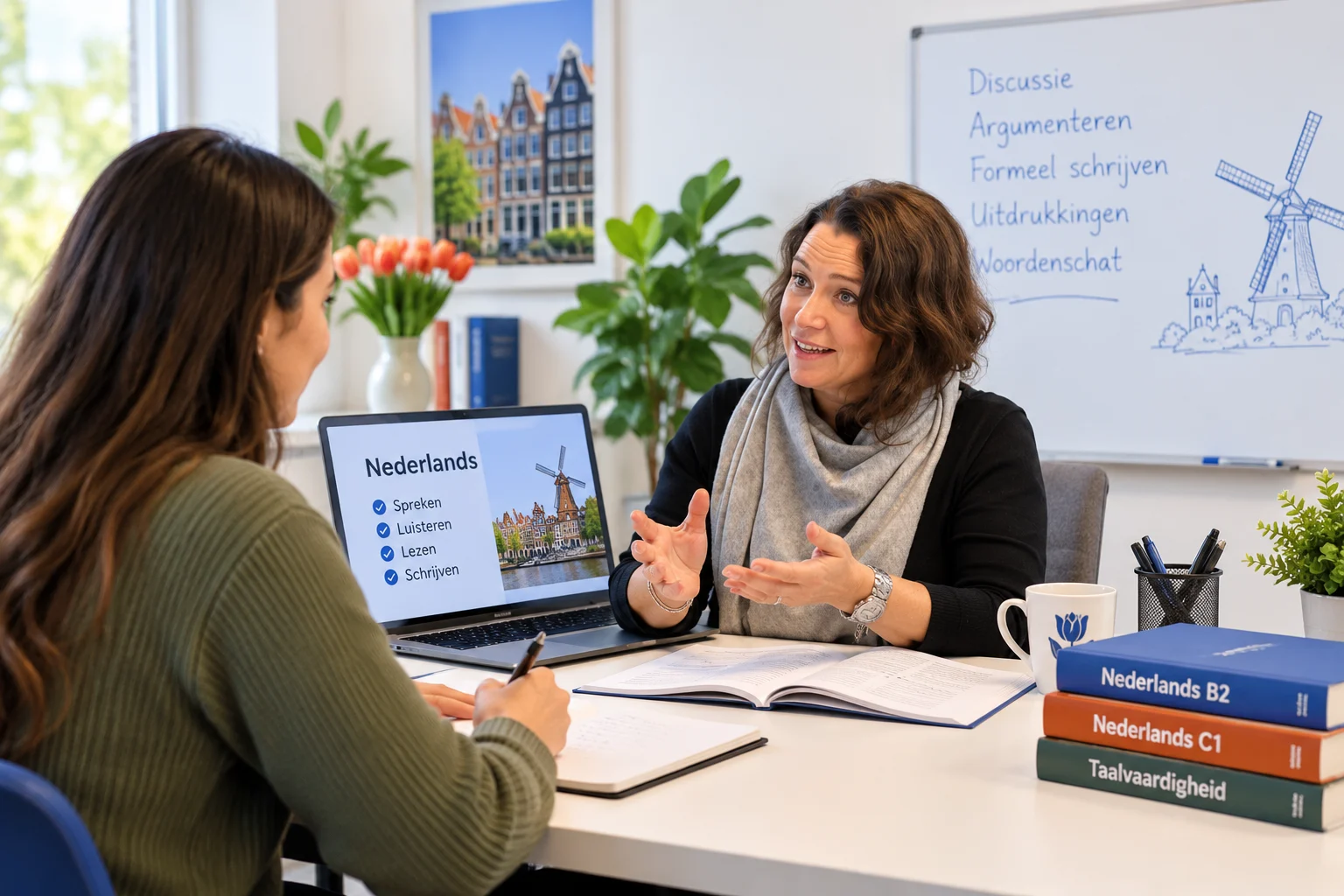
When you have dozens of options laid out before you, choosing the right one feels impossible. It’s not just about picking a restaurant; it’s about finding the best online Dutch language course that actually works for you.
I have been there myself. Based on years of experience coaching thousands of students through their Dutch language learning process at The Dutch Minds, I know just what it takes to distinguish the best course from the rest that only ends up wasting your valuable time and money.
In a world where every program claims to be “the best,” the truth is that the right course isn’t the most popular or the cheapest. It’s the one that aligns with your personal goals, fits your learning style, and supports your journey from beginner to confident speaker.
What Actually Makes the Best Online Dutch Language Course?
The following factors make any Dutch language course online “the best”. So before enrolling, consider them before paying your hard-earned money.
- Real-life speaking practice rather than pre-recorded video lessons. Watching videos feels like an effective use of your time, but rarely will actually teach you to converse.
- An organized curriculum with gradual progress. You should always know where you stand and what steps come next in a logical process.
- Human instructors rather than AI-powered chatbots. Correction of pronunciation and grammatical errors requires the human touch.
- Schedule flexibility to accommodate your life rather than the other way around.
The Most Important Factor: Know Your “Why”
Before you even start to compare Dutch Language courses, make sure you know your goal clearly. If you simply want to order coffee and talk to your neighbors, just enrol in beginner’s course Dutch language with useful vocabulary. And if you are preparing for the inburgering test, choose a course that prepares you for it.
Are you looking to pass your inburgering exam? These Dutch classes online guarantee results.
Red Flags Worth Watching For
Not all of the courses from the online Dutch course deliver on their promises. Be wary of:
- Vague claims such as “fluent in 30 days” without an explanation of methods
- No credentials or experience of the tutor
- Total lack of any live sessions – everything recorded without the feedback loop
- Prices that are either unreasonably low or high without a good explanation
- No trial class or free class offered before signing
Practical Tips for Picking the Right Fit
- Inquire about class size – smaller groups or one-on-one sessions would give you more talking practice.
- Consider the qualifications of a teacher rather than stars, which are easy to earn artificially.
- Find out whether there is a curriculum map instead of assurances about conversational fluency.
- Pay attention to reviews highlighting particular results rather than just general approval.
- Listen to your intuition after a trial lesson; chances are that if something feels off, it is not the right choice for you.
Why most Dutch language courses fail and what to look for instead?
Make the Choice That Changes Everything
Making the right choice when choosing an online Dutch language course shouldn’t really be difficult. Just go through the steps one by one: identify your goals, assess your personal learning style, look into the methodology of the course, evaluate prices, make sure about certifications, read reviews, check your technology, and listen to your gut feelings.
And if you would like to find out how much The Dutch Minds can offer you as a course where you learn structured lessons, but still get a chance to put them into practice with the help of native speakers who understand the needs of expats, visit our Dutch language course page.
Frequently Asked Questions
Interactions with the tutor in real time, an organized and structured curriculum with tangible progress, flexibility, and actual speaking practice.
The course that gives beginners a proper grounding at the A1 level, live corrections, and small classes or individual lessons would be most beneficial.
Yes, especially if you require proof of language skills, such as in cases of inburgering, visa, or other professional needs.
There can be quite a significant difference in cost due to differences in the size of the class, experience of the tutor, and structure of the course. However, what really matters here is value for money.
Some courses issue certificates, particularly if they follow the CEFR standards, but it would be best to ask the provider directly about that.
It depends on what you want to achieve; apps are good for learning vocabulary, but courses that offer live tutoring are better when it comes to mastering conversational skills.
It should have certified tutors, clear curriculum information, actual testimonials from students talking about their achievements, and the opportunity to take a trial lesson.